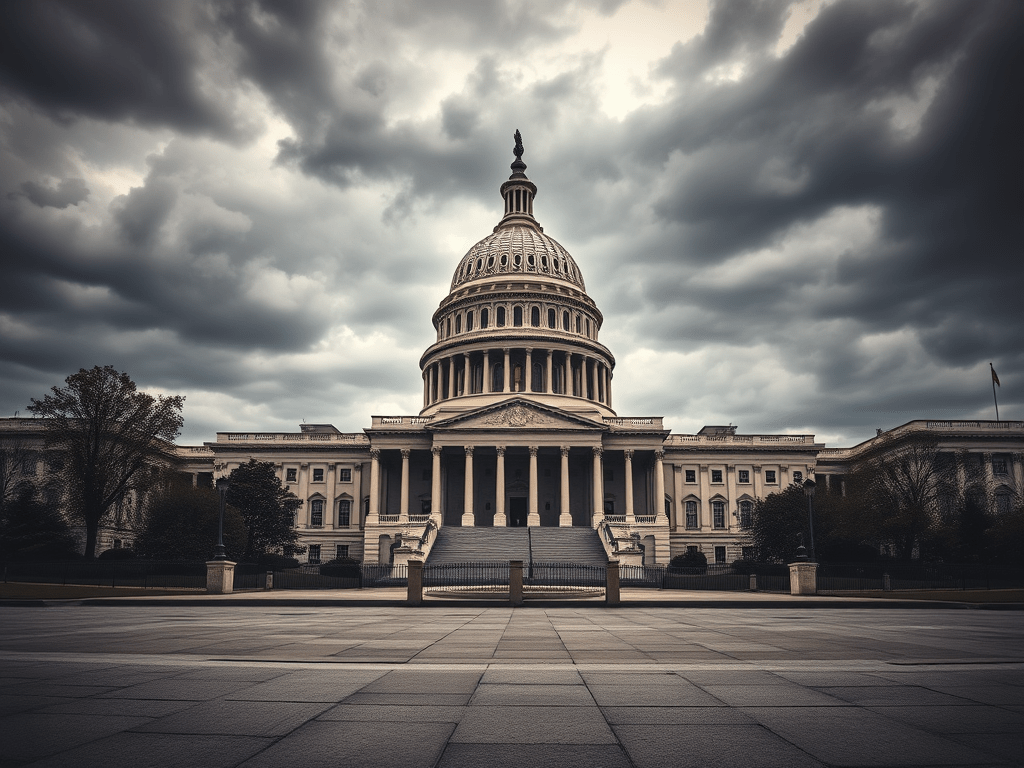
Washington D.C. – May 17, 2025
— In a historic move, credit ratings agency Moody’s Investors Service has downgraded the United States’ long-standing AAA credit rating, citing persistent fiscal deficits, rising interest costs, and a lack of political consensus on long-term debt management. The downgrade marks the last of the “Big Three” credit agencies to remove the U.S. from its once-pristine triple-A status.
In an unusually frank statement, the U.S. Department of the Treasury acknowledged the seriousness of the downgrade and expressed gratitude for what it called “a sobering but necessary wake-up call.”
“Moody’s has done what many of us in Washington have avoided for too long—telling the hard truth,” Treasury Secretary Scott Bessent said in a press conference Friday. “While we may disagree on timing or methodology, we hear the message loud and clear. America must regain control of its fiscal future.”
Moody’s cited the growing mismatch between government revenues and spending obligations, compounded by rising interest rates and the increasing cost of servicing the national debt, which recently surpassed $36 trillion. The agency also pointed to political brinkmanship—especially around debt ceiling negotiations and temporary funding measures—as a factor that eroded confidence in the government’s ability to manage its finances sustainably.
“Governance weaknesses have made it increasingly difficult for the U.S. to formulate and implement credible fiscal policies to address its mounting debt burden,” the Moody’s report stated.
The downgrade is not expected to trigger an immediate economic shock, as U.S. Treasury securities remain the global benchmark for safe assets. However, it may lead to marginally higher borrowing costs for the government and could reverberate through financial markets, particularly if investor confidence wavers.
President Trump, speaking from the White House, acknowledged the downgrade with a tone of realism and responsibility.
“We’ve been put on notice, and it’s time we take that seriously,” Trump said. “This isn’t about partisan blame—it’s about coming together to make the hard choices that ensure America’s long-term strength and solvency.”
In Congress, reactions were mixed but generally respectful of the agency’s decision. Speaker of the House Mike Johnson and Senate Majority Leader John Thune released a joint statement vowing to work toward a bipartisan fiscal framework that includes entitlement reform, targeted revenue adjustments, and spending discipline.
“This is not a moment for panic. It is a moment for purpose,” the statement read. “We thank Moody’s for highlighting what many Americans already know: the debt path we’re on is unsustainable.”
Some critics, however, expressed concern that the downgrade could become a political cudgel rather than a catalyst for meaningful reform.
“We need fewer press conferences and more action,” said Sen. Alicia Warner (I-ME). “The American people deserve more than promises—they deserve a plan.”
Economists warn that the downgrade should not be taken lightly, even if the immediate market response remains muted.
“This is a psychological blow more than a financial one—for now,” said Dr. Marcus Chen, a senior fellow at the Brookings Institution. “But if it leads to genuine reform, it could ultimately be a blessing in disguise.”
As the U.S. faces growing global competition and rising domestic needs—from infrastructure to healthcare to defense—the pressure is mounting for lawmakers to balance investment with restraint.
For now, the government’s tone has shifted—from defensive to determined.
“America has always risen to meet the challenge,” Bessent said. “This is our moment to do it again—wisely, responsibly, and together.”



 A More Empathetic World