Moscow, Russia – May 19, 2025
— In a potentially pivotal moment in the nearly three-year-long war in Ukraine, senior Russian officials are reportedly weighing a formal shift in strategy that could bring an end to the conflict, driven in large part by the staggering human cost borne by Russian families.
Sources close to the Kremlin, speaking on condition of anonymity due to the sensitivity of the discussions, say that President Vladimir Putin has recently held closed-door consultations with military leaders, members of the Security Council, and regional governors to assess what one official described as the “unsustainable toll” the war has taken on Russian society.
“The losses are now being felt in every city, every village,” said the official. “There is a growing recognition that this cannot continue indefinitely without tearing apart the social fabric of the country.”
An Unspoken Grief
While the Russian government has tightly controlled information about battlefield casualties, independent monitoring groups estimate that as many as 150,000 Russian soldiers have been killed or severely wounded since the invasion of Ukraine began in February 2022.
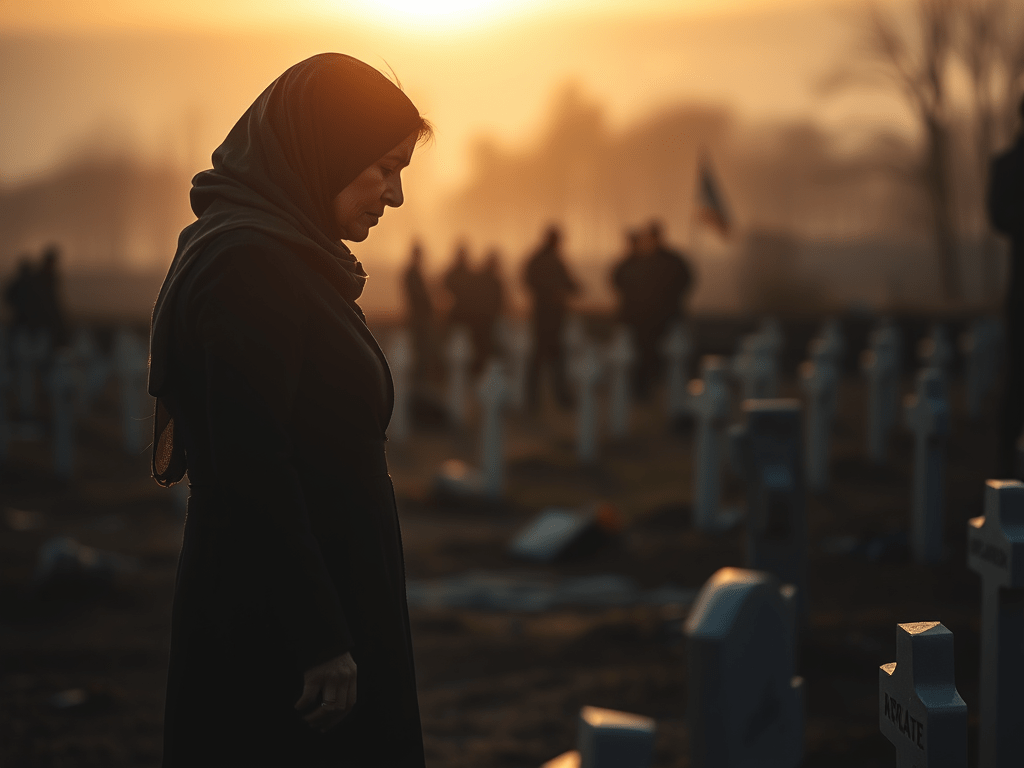
Many of the fallen are young conscripts or mobilized reservists from rural regions, where economic opportunity is limited and military service often presents one of the few paths to stability. But as the war drags on, the stream of funerals, the silence from the authorities, and the growing chorus of grieving families are creating pressure even the Kremlin is finding hard to contain.
“I buried my son last fall. He was 19,” said Marina, a mother from Novosibirsk who asked that her last name not be published for fear of reprisal. “They said he died a hero. But I never wanted a hero. I wanted my boy to come home.”
A Calculated Reassessment
The Kremlin has not publicly confirmed a strategic pivot, but recent statements from high-ranking officials suggest a change in tone. In an address last week, Defense Minister Andrei Belousov acknowledged “significant sacrifice” and spoke of the need to “safeguard the long-term stability and strength of the Russian state.”
Foreign policy analysts believe these comments signal a reassessment of the war’s value relative to its cost—not only in lives, but in Russia’s international standing and economic vitality.
“The leadership is doing the math,” said Tatiana Stanovaya, a Russia expert with the Carnegie Russia Eurasia Center. “They are trying to balance perceived strategic gains against the deepening domestic discontent caused by mounting casualties and long-term isolation.”
Silent Dissent, Growing Grief
Public opposition to the war remains dangerous in Russia, where criticism of the military can carry criminal penalties. Still, beneath the surface, resistance is quietly growing. Mothers’ groups have organized in secret. Orthodox clergy have begun offering private blessings for peace. And in cemeteries across the country, headstones bearing the same dates and the same war tell a story few dare to speak aloud.
“There is no propaganda strong enough to overcome the loss of a child,” said Alexei, a former military medic who served in Luhansk and has since left Russia. “You can justify a war until it comes for your family.”
No Clear Path Yet
While discussions are underway, it remains unclear what form a Russian withdrawal or ceasefire might take—and whether Ukraine would accept any proposal that falls short of full territorial restoration. President Volodymyr Zelenskyy has repeatedly stated that only a complete Russian withdrawal and accountability for war crimes would pave the way for peace.
In the meantime, the war continues. Front lines in the east remain active, drone attacks strike civilian areas, and the humanitarian crisis deepens on both sides.
Still, the fact that the Kremlin is even considering an exit strategy is being seen by some as a sliver of hope.
“If there is a chance to stop the bloodshed, even a small one, it must be pursued,” said Oksana Romanchuk, a Ukrainian relief worker near Kharkiv. “Too many lives have already been lost. Let it not be in vain.”

 A More Empathetic World